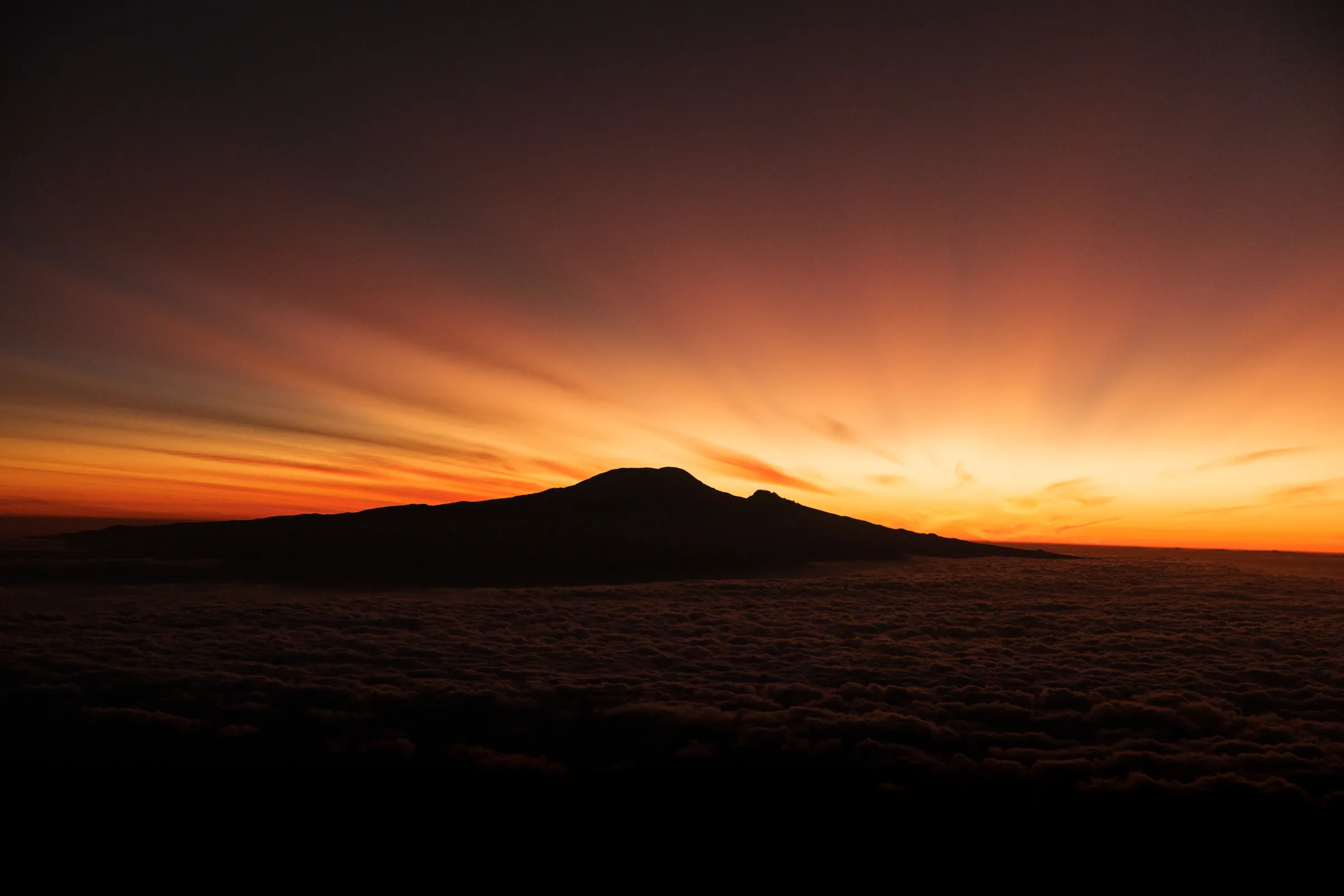
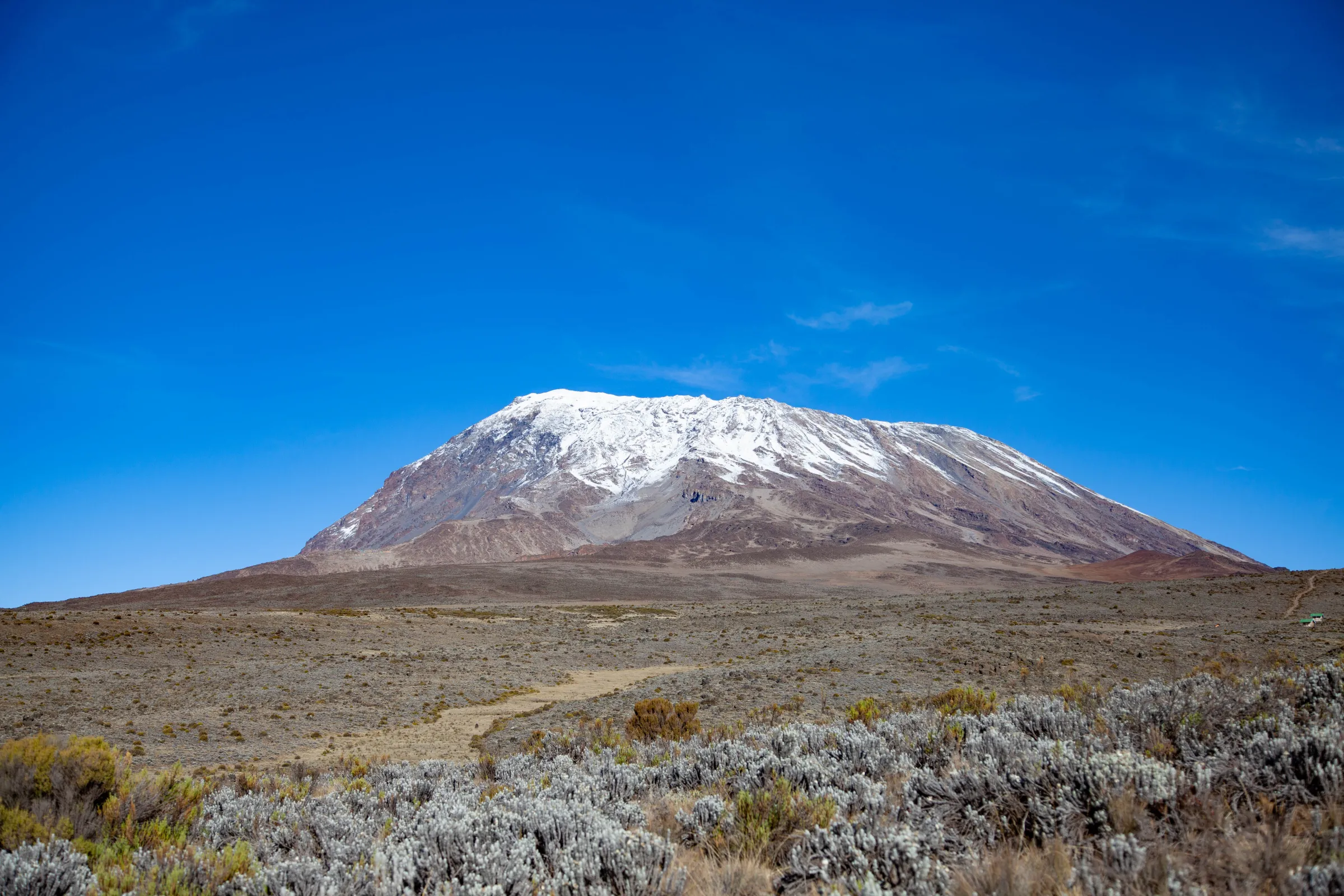
Machame and Lemosho are the two routes we book most often, and they share more than they differ — both approach Kilimanjaro from the south and west, both cross the same dramatic Barranco Wall, and both give a genuine shot at the summit for a reasonably fit climber with no prior altitude experience. The real differences are days, crowds, and how gradually you gain altitude.
Machame — often called the Whiskey Route — is 6 or 7 days and starts at the Machame Gate on the mountain's south side. It's steeper and more direct than Lemosho, which means less time overall but a slightly harder acclimatisation profile. Because it's the most popular route on the mountain, camps can be noticeably busier, particularly at Barranco Camp where several routes converge.
Lemosho starts further west and typically runs 7 or 8 days, adding an extra day of walking through untouched forest and moorland before joining the same Barranco/Barafu summit path as Machame. That extra day is not padding — it's additional time at moderate altitude before the push above 4,000 metres, and it shows up in the numbers: independent studies of KPAP-registered operators consistently show Lemosho's longer itineraries carrying meaningfully higher summit success rates than 6-day Machame climbs, largely because of better acclimatisation, not fitness.
Scenery-wise Lemosho has the edge in the first two days, passing through genuine old-growth forest with a real chance of colobus monkeys, before opening onto the same high moorland both routes eventually share. Machame's early days are attractive too, just more heavily walked.
Our default recommendation for a first-time climber with no fixed deadline is 7-day Lemosho: the extra acclimatisation day is the single biggest lever on summit success that a route choice can pull, ahead of fitness or gear. If your schedule genuinely only allows 6 days, Machame remains a well-proven route — we simply build in a slower pace on summit night and brief every client honestly on what the shorter timeline trades away.
Whichever route, every Wakali climb runs at KPAP-recommended crew wages and carries portable oxygen and a full first-aid kit with every group — the route matters less to your safety than the guide team walking it with you.
Tell us your dates and interests and a specialist in our Arusha office will send back a real, priced trip — not a brochure.
Request a proposal